Krasamouna
Brief
The client, Krasny Pishchevik, is one of the largest confectionery manufacturers in Belarus, with a rich history and a broad product range.
The company’s portfolio includes zefir marshmallows, candies, kozinaki, nuts, dragées and other sweets.
At the same time, the assortment had developed gradually: different product lines had their own names, positioning and visual solutions. Zefir remained the key sales driver, but the parent brand was barely performing as a unifying force. The products existed separately, did not reinforce one another and did not form a coherent brand system.
Fabula Branding was tasked with a strategic challenge: to organize the portfolio, strengthen the brand architecture and create a clear system that would support growth and recognition.
Objectives
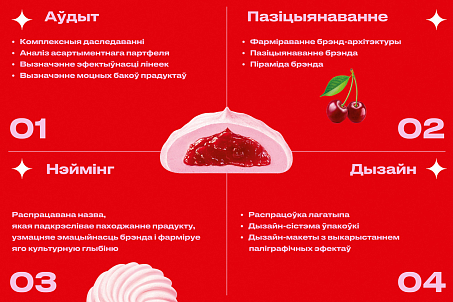
- conduct market research and a brand audit;
- analyze the product portfolio;
- develop the optimal brand architecture;
- define the positioning;
- create a new name for the unifying brand;
- develop a packaging design system.
Research, Analytics and Audit
Fabula Branding conducted comprehensive research into the market, consumers, the competitive environment and current trends in the sweets category. Particular attention was paid to auditing the existing product portfolio.
The analysis made it possible to identify which product lines had stable demand, which required a strategic review, and which strong consumer benefits had previously not been communicated through the packaging.
It also became clear that not all products should be developed under a single parent brand. For some lines, it was logical to preserve their independence; for others, to emphasize the manufacturer’s status; and for a significant part of the assortment, to create a brand with a clear identification system that would bring them together.
Product Portfolio Structure
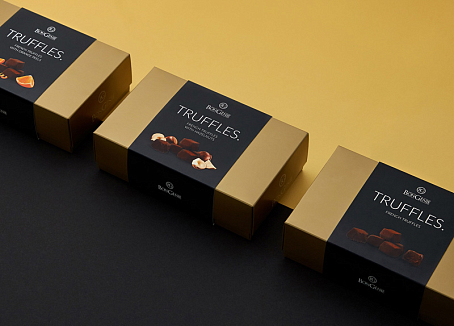
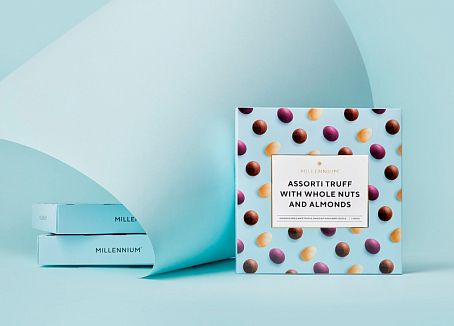
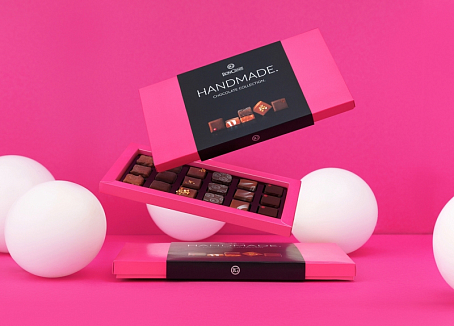
As a result of the work, an updated brand architecture was proposed. Popular and already recognizable lines — Pervy Bobruysky, Tinki and Lefirelle — retained their names and visual features. The premium handmade zefir line remained under the Krasny Pishchevik brand, reinforcing its status and traditions.
For the remaining products, a strategic decision was made to create a new brand: modern, emotional and nationally rooted.
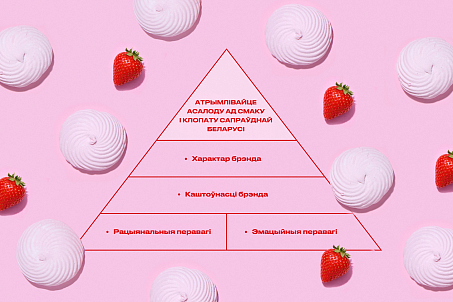
The platform for the new brand was the positioning: “Enjoy the taste and care of genuine Belarus.”
Positioning
At the heart of the idea is quality based on attention and care: care for the recipe, for traditions, for the naturalness of ingredients and for the people the products are made for. This positioning connects the brand with the country’s cultural code — its warmth, sincerity and emotional depth. Here, taste is not just gastronomic pleasure, but an expression of the manufacturer’s attitude toward its craft and its consumers.
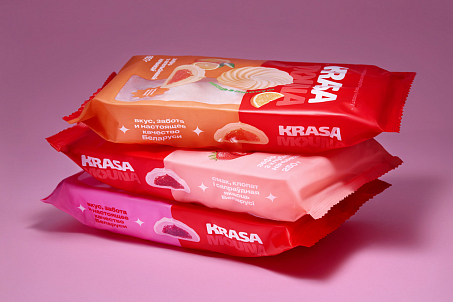
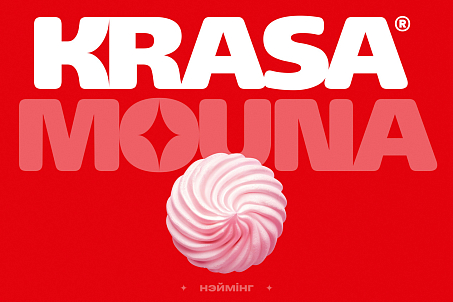
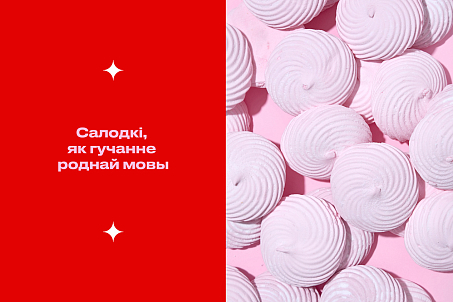
This is how KRASAmouna, or Krasamouna, came to life — a Belarusian adverb that reveals the beauty, authenticity and melodiousness of the Belarusian language.
Naming
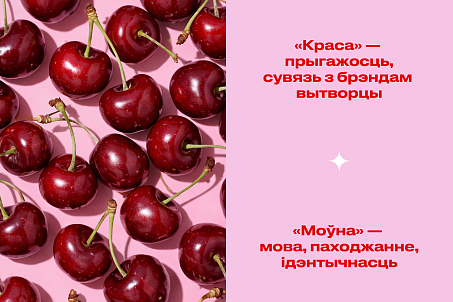
On the one hand, it is a holistic image built around one of the most beautiful words in the language. On the other, the name is a rare and distinctive example of so-called dynamic naming, which gives it a sense of innovation and imagination. The name easily breaks down into two meaningful parts. Krasa — a phonetic reference to the manufacturer’s name, Krasny Pishchevik, with an emphasis on aesthetics and beauty; Mouna — an emphasis on language, origin and national identity.
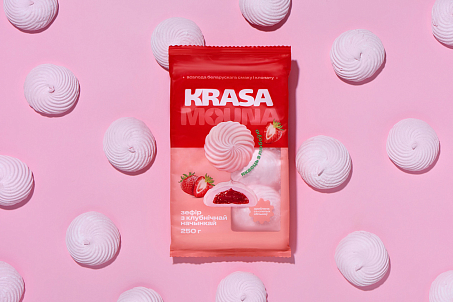
The name sounds authentically Belarusian while remaining understandable to a Russian-speaking audience: in Russian, it means “eloquently.” In this way, the Belarusian language became the foundation of the brand’s communication, strengthening its identity and appeal on the shelf.
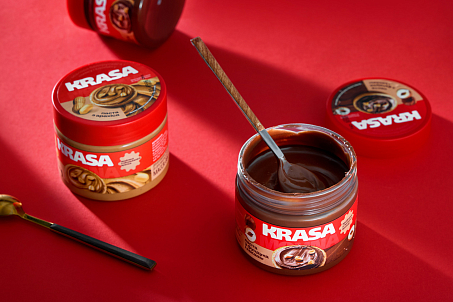
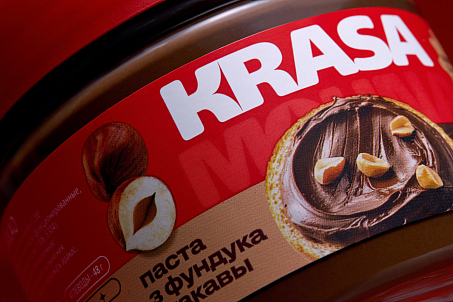
The logo is set in a unique custom typeface. A graphic star element is built into its structure, adding expressiveness and making the mark memorable.
Packaging Design
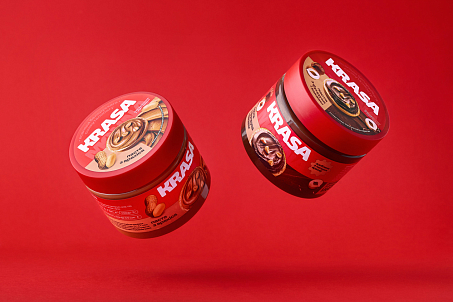
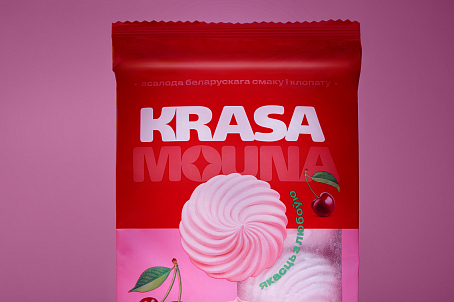
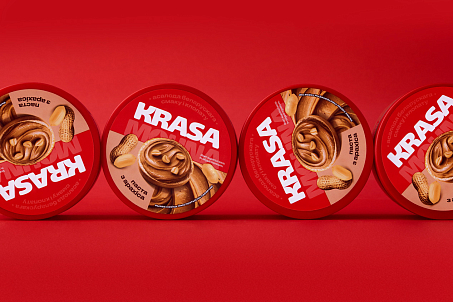
The name is visually divided into two parts, emphasizing the multilayered nature of the naming: Mouna reads as a reflection of Krasa, creating a sense of symmetry and rhythm.
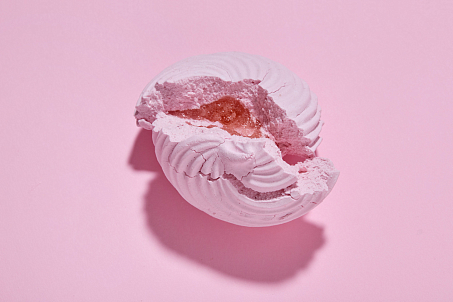
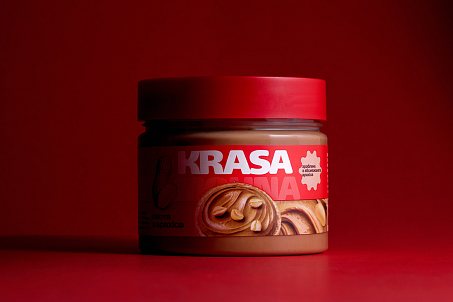
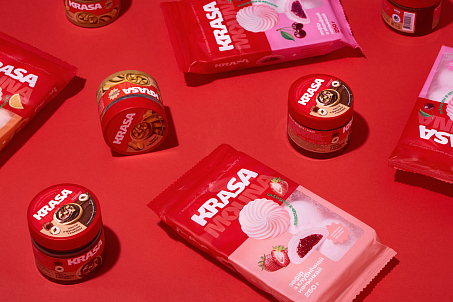
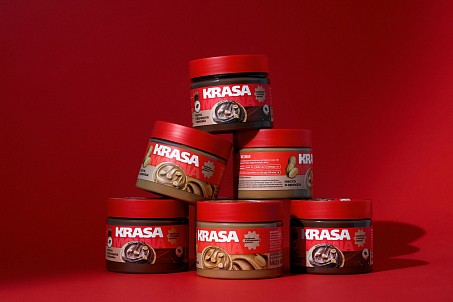
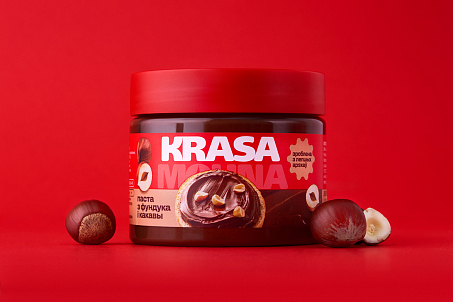
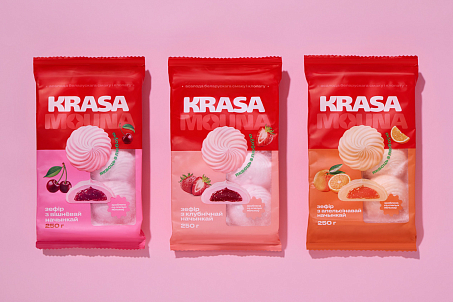
Red became the key attribute of the visual identity — both as a reference to the manufacturer’s name and as a strong shelf accent.
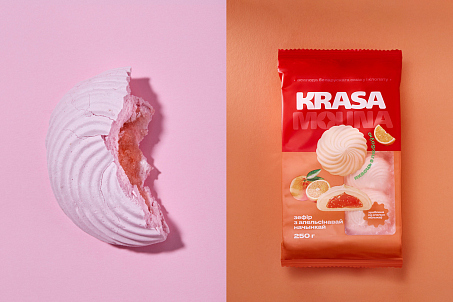
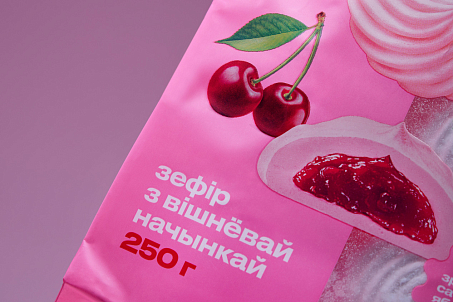
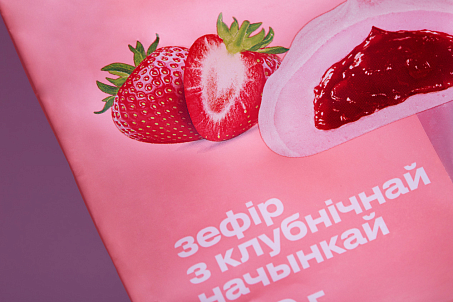
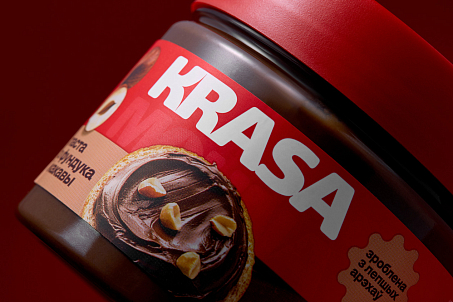
The packaging design is built on a system of blocks adapted to different product formats. The composition takes into account the specific shape of each package and creates a structured visual field. The product zone features a large cutaway image of the product, enhancing appetite appeal and demonstrating quality.
The system can be easily scaled across a wide assortment, ensuring recognition and a unified style while preserving product differentiation.
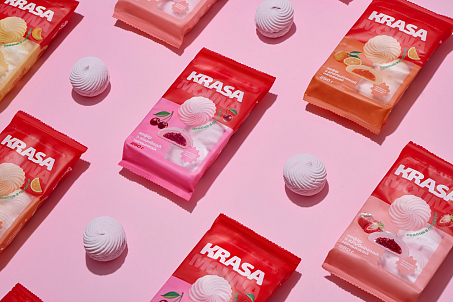
Krasamouna became a unifying brand that systematized a significant part of the portfolio and strengthened the company’s brand architecture.
Result
The updated structure allowed the products to work as a single system, increasing mutual recognition and improving shelf effectiveness. The project became an example of a strategic approach to product portfolio architecture, where naming and design build a long-term logic for brand development.